
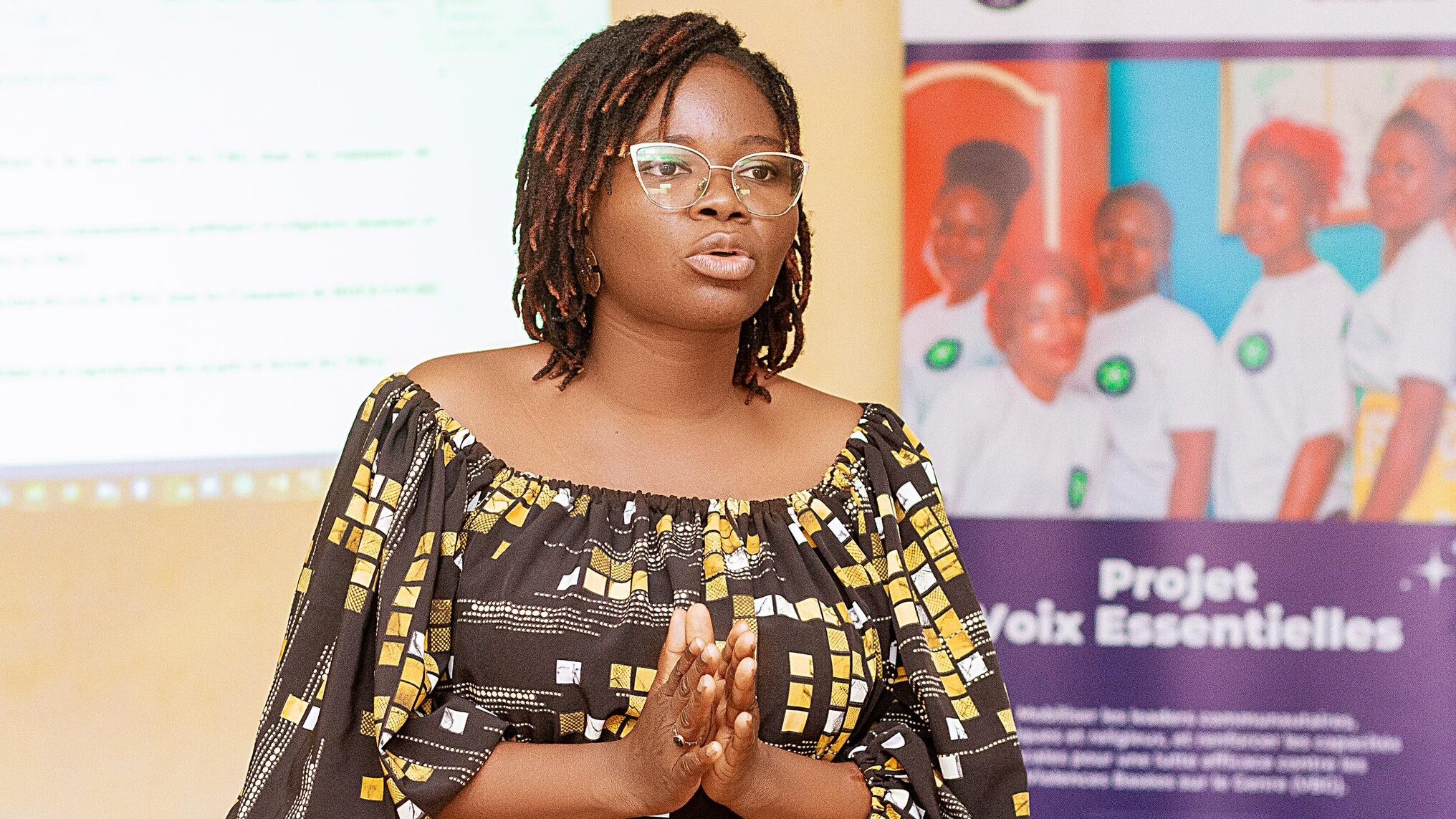
In Ouagadougou, women's organizations, health authorities, and technical partners gathered at a multisectoral forum organized as part of the Essential Voices | Women's Leadership Against Malaria initiative. The goal: to institutionalize gender in national malaria control policies and position women's leadership as a key lever for elimination in Burkina Faso.
Ouagadougou, February 17, 2026 – In a country where malaria remains the leading cause of medical consultations and hospitalizations, elimination cannot be achieved without the structured mobilization of women, who are a key target group for malaria, as well as children under the age of 5. It was in this context that the multisectoral forum "Women & Malaria: Transforming Female Leadership into a Force for Malaria Elimination" was held, organized as part of the Essential Voices | Women's Leadership Against Malaria initiative, led by Speak Up Africa and funded by the Global Fund.
According to the Ministry of Health's 2024 statistical yearbook, malaria accounts for:
These figures highlight the urgent need for a coordinated, inclusive, and sustainable response.
Women, who are at the forefront of households and communities, are responsible for prevention, promoting the correct use of mosquito nets, providing care support, and monitoring the treatment of family members. However, their strategic role is still insufficiently integrated into decision-making and budgetary processes.

Bringing together SP-Palu, sectoral ministries, technical and financial partners, community leaders, and civil society organizations, the forum provided a structured framework for dialogue and engagement. In the fight against malaria, women are both priority targets and key actors. As such, they must play a full and active role in strategic decision-making, as community influencers, guardians of prevention, and trusted intermediaries.
This change, driven by women from these communities, is based on three essential conditions:
This forum, held as part of the Essential Voices | Women's Leadership Against Malaria initiative, highlighted the importance of community action in health governance. Because lasting change stems from the connection and alignment between policies and dialogue with communities, with a view to jointly developing appropriate strategies.
As stated by Irène Zoungrana, President of the Vision Nouvelle Association:
"To defeat malaria in Burkina Faso, women must be involved in the fight."
At the heart of the discussion: how can female leadership be turned into a sustainable institutional lever?
This forum identified three priority areas:
The validation of a roadmap accompanied by a monitoring mechanism marks a significant step forward toward a structured and measurable contribution by women's organizations to the national goal of elimination.
For Roukiattou Ouédraogo, Regional Advocacy Advisor at Speak Up Africa:
"Giving women a voice means recognizing their ability to influence public policy, mobilize resources, and bridge the gap between community realities and national decisions."
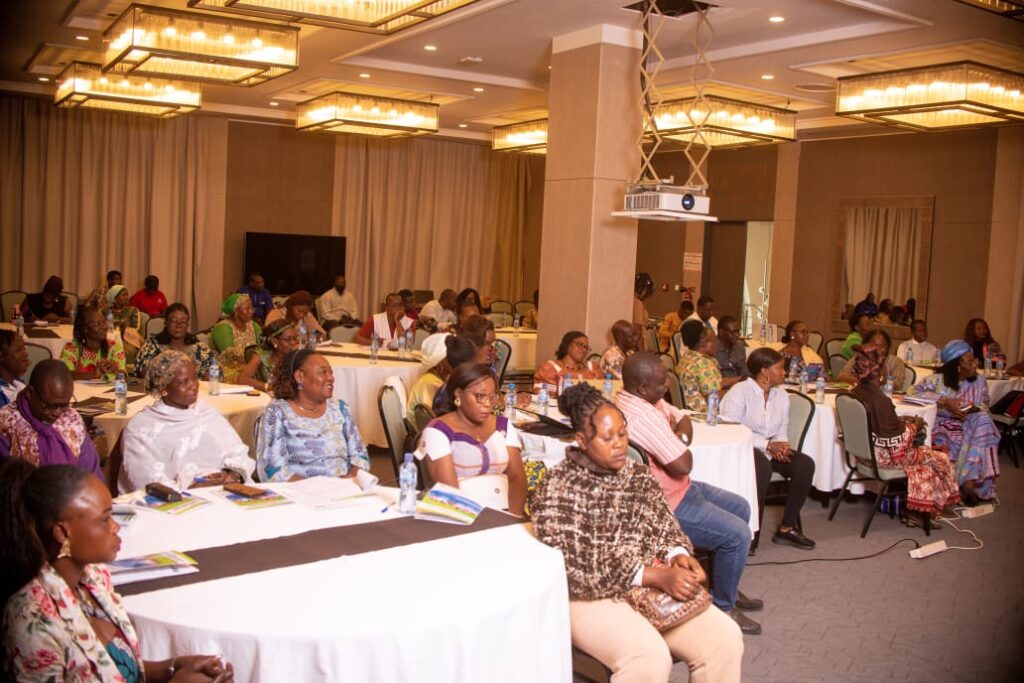
Eliminating malaria is not solely the responsibility of the health sector. It involves institutions responsible for gender issues, local authorities, religious and traditional leaders, the media, and the private sector.
The representative of SP-Palu, Dr. Sidzabda Kompaoré, welcomed this mobilization, emphasizing:
"This forum is a major opportunity to strengthen coordination and accelerate action toward the elimination of malaria."
In the context of digital transformation, community mobilization and digital communication have also emerged as strategic levers for amplifying impact.
Community organizations (Association Vision Nouvelle, ONIDS, Association KAMY), under the leadership of the Réseau des Voix EssentiElles du Burkina Faso, call on all stakeholders, public institutions, technical and financial partners, community organizations, and opinion leaders to:
Eliminating malaria by 2030 is possible.
It will require strong, coordinated, and inclusive multisectoral mobilization.
And at the heart of this mobilization: women.
Every year on October 11, International Day of the Girl Child, we are reminded that the promises made to girls often remain suspended between ambition and reality. In a world where equality policies abound but struggle to transform daily life, two organizations supported by the Voix EssentiELLEs initiative, the Réseau des Jeunes pour la Promotion de l'Abandon des Mutilations Génitales Féminines et des Mariages d'Enfants (RJPA-MGF-ME) in Senegal and the Groupe de Jeunes Filles et Femmes Autonomes (GJFA-ONG) in Benin offer an inspiring counter-narrative: that of local empowerment, led by girls, for girls.
In Sédhiou, the facts speak for themselves: a girl is twice as likely to drop out of secondary school as a boy. Behind these statistics lie faces, stories and unfulfilled dreams. In addition to education, there are also the heartbreaking testimonies received by the Youth Network, highlighting in their stories the obstacles they face, especially in terms of female circumcision and early marriage. The Youth Network was born of this urgency, of this desire to no longer leave girls on the sidelines of decisions that concern them.
The main problem that the Youth Network is trying to solve is the fight against excision and child marriage, which constitutes a violation of their fundamental rights. Its members have not only decided to "raise awareness": they have chosen to transfer power. Girls are encouraged to become ambassadors for the fight against GBV in their schools and communities. They co-facilitate workshops, take part in digital campaigns and design local actions as part of the organization's advocacy work.
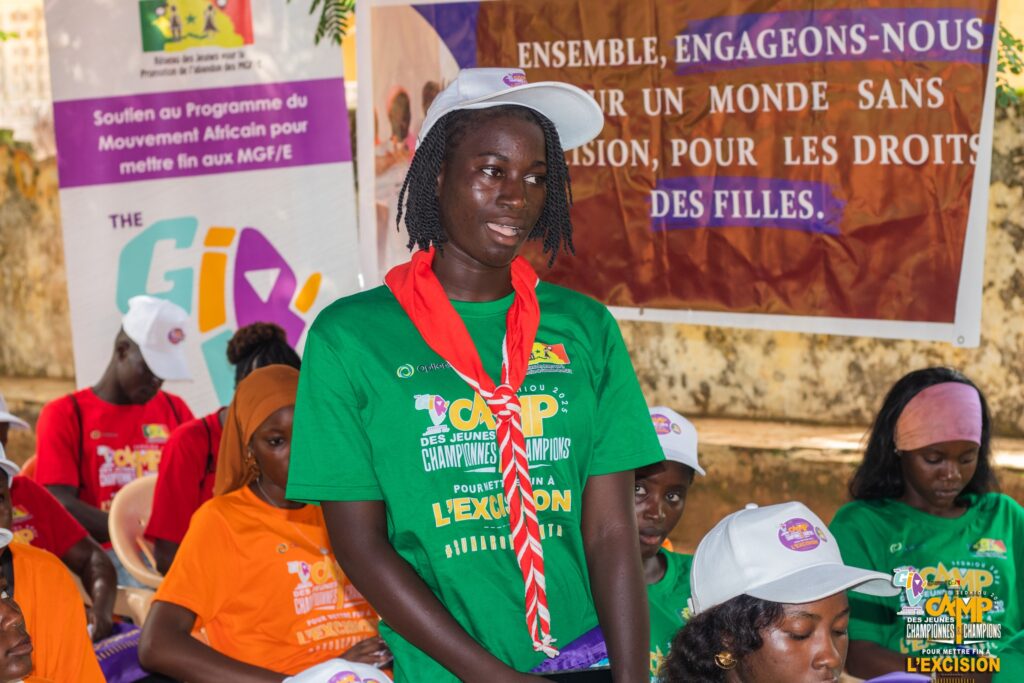
This reversal of approach changed everything. Indeed, with the involvement of young girls, the project is more relevant and anchored in reality. Thanks to their ideas and feedback, the Youth Network has been able to adapt its activities to the real needs of its targets. In addition, the girls' involvement has led to greater buy-in and mobilization, indirectly reaching potential beneficiaries.
The network has seen the emergence of a generation of young women who are more confident, more vocal, able to dialogue with local authorities and influence the establishment of community listening spaces to prevent harassment. This evolution represents a real transformation in the relationship to power.
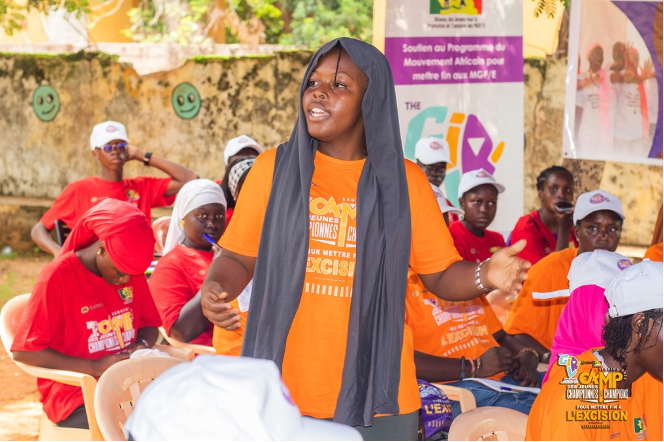
At the time, she was completely unaware of what to do in the event of rape, or of any referral structures. By taking part in the activities organized by the Youth Network, she was able to acquire valuable knowledge about care and support for survivors. Today, she uses her voice to prevent, support and empower young girls in her community.
This individual shift, from silent victim to agent of change, illustrates the power of locally-rooted, human-rights-based approaches that value young girls' own appropriation of challenges and formulation of solutions. Young girls are transformed from mere beneficiaries into agents of change and advocates in defense of their rights.
On the other side of the continent, in Benin, the Groupe de Jeunes Filles et Femmes Autonomes (GJFA-ONG) demonstrates that economic emancipation and leadership are deeply connected. The organization places young girls at the heart of all its actions, not as beneficiaries, but as co-creators and agents of community change.
They take part in project design, formulate their own priorities for action and decide on the strategies to be adopted on issues as crucial as gender-based violence, sexual and reproductive health and local accountability. These participatory spaces have transformed the posture of these girls, who are now able to engage in dialogue with decision-makers.
In the communes of Bopa and Houéyogbé, girls' advocacy has led to the inclusion of budget lines dedicated to the fight against GBV and the promotion of girls' health and rights. This is a major step forward, demonstrating that their voice no longer stops at awareness-raising workshops, but is echoed in local public policies.
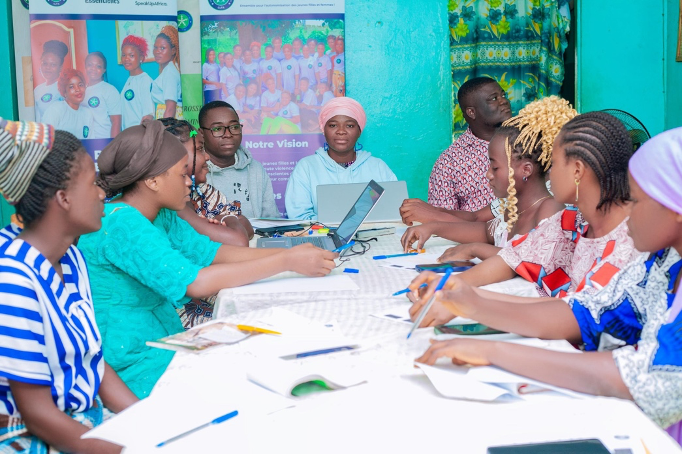
Young beneficiaries taking part in an advocacy message workshop
The story of Dorcas Megbehou embodies this evolution. Initially a participant in GJFA activities, she was mentored into entrepreneurship in market gardening and animal husbandry to generate income to pursue her studies. Today, she is an independent entrepreneur, mentor and spokesperson for other girls in her commune. Her story sums up the organization's philosophy: the achievement of financial autonomy as a springboard to political empowerment and legitimacy.
Today, these young girls are no longer content to simply demand their rights, they are negotiating, influencing and redefining the rules of the game within their communities. Their presence at communal meetings, their involvement in GBV/SSRD consultation frameworks, and their local advocacy campaigns bear witness to one thing: female leadership is no longer an abstract concept, but a tangible political reality, being built from the ground up.
What these two organizations show is that lasting transformations come not from global declarations, but from the ability to localize the ambition of women's leadership to meet the challenges of improving their condition. Global debates on gender equality speak of participation, resilience and economic empowerment. Their application on the ground comes to life when a girl dares to denounce a forced marriage, or when another obtains a microcredit to finance her business.
By integrating girls into design, implementation and advocacy, these initiatives illustrate a change of scale: from an approach "for girls" to one "by girls". This change, although local, is part of a global reflection on the relocation of power in development. It responds to repeated calls for international aid to be more feminist, more rooted in community dynamics, where local knowledge and priorities dictate solutions.
As we celebrate International Day of the Girl, we must not only remember their rights, but listen to their voices, understand their strategies, and above all, give them a lasting place in the governance of change. Because Africa's future will not be built for girls, but with them.