
08 12 2025
Blog

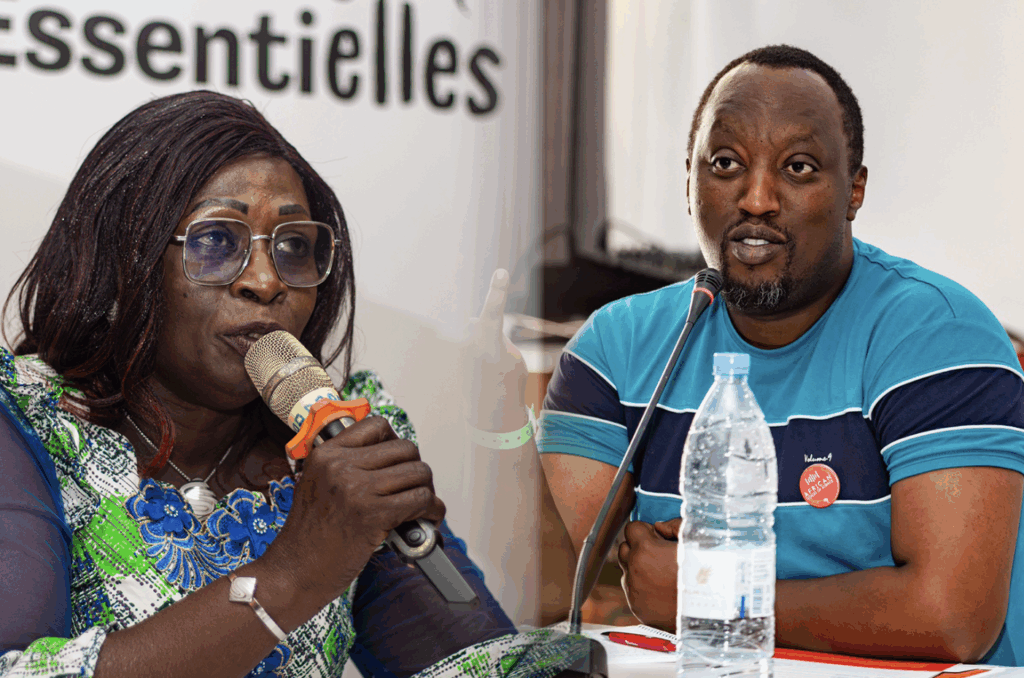
By Dr. Christian Rusangwa, Director of Technical Assistance at Muso, and Josiane Adja N’Koh Kouame, President of the NGO GNOUWIETA
Ending HIV is no longer a scientific challenge. It is a moral choice, and the world has five years to make it.
We often talk about ending HIV/AIDS as a technical goal. But for us—as an African scientist and a community advocate—the issue is deeply human. Behind every statistic lies a life that could have been saved, a family that could have stayed together, a future that could have been preserved. The tools exist. Science is ready. What is missing is the courage to confront the inequalities that keep the epidemic alive.
Imagine a world where no baby is born with HIV, where no teenager loses her future because of a preventable infection, and where people living with HIV are neither feared nor judged. That world is well within our reach.
But to achieve this, we must stop treating equity as optional. History will not remember how advanced our technologies were. It will remember whether we chose to make them accessible to everyone.
If some people still believe that HIV is “under control,” they need only look at who remains the most affected.
Two-thirds of people living with HIV reside in sub-Saharan Africa, and adolescent girls and young women account for more than 60% of new infections. In Eastern Europe and Central Asia, new infections are on the rise, not for biological reasons, but because of punitive laws and the criminalization of people who use drugs. Even wealthy countries fail to protect Black, migrant, LGBTQI+, and racialized communities. These disparities are not accidental. They result from political choices, social norms, and underfunding of the actors who know their communities best.
That is why we insist: African scientists and civil society must be at the heart of decision-making.
We understand the realities. We understand the obstacles. And we know what works. Yet we remain underfunded and marginalized in global political forums.
Let’s acknowledge how far we’ve come. At the height of the epidemic, access to treatment was a privilege reserved for a select few. Today, more than 30 million people are receiving antiretroviral treatment. AIDS-related deaths have fallen by 70%.
New prevention tools—self-testing, injectable PrEP, and long-acting treatments—are redefining autonomy and choice.
But with waning political attention and stagnant funding, these hard-won gains are now under threat. In 2023 alone, 1.3 million people were newly infected and 630,000 died from AIDS-related causes. Meanwhile, global funding is declining, and the inequalities seen during the COVID-19 pandemic are reemerging. The Global South waited for vaccines. It now risks waiting for innovations against HIV.
Ending HIV requires more than just new tools. It requires putting an end to the injustices that make some people more vulnerable than others.
We need governments willing to repeal discriminatory laws that force people to hide and live in the shadows. We need societies willing to combat the stigma that still prevents so many people from seeking and accessing care. We need leaders willing to seriously invest in prevention.
These failures are not inevitable. They are tolerated and can therefore be turned around.
The International Conference on AIDS and STIs in Africa (ICASA) demonstrates how African researchers, practitioners, and community leaders are developing solutions tailored to our realities. But international solidarity is waning, and donor fatigue is a real concern.
That is why we maintain that ending HIV will depend on three fundamental changes:
1. Increased domestic funding.
The hardest-hit countries cannot rely indefinitely on uncertain external aid. Sustainability requires local investment.
2. Fostering local partnerships, particularly with the private sector.
Businesses benefit from a healthy population. They should be encouraged to support innovation and access to preventive care and treatment.
3. Greater accountability on the part of multilateral institutions, and a central role for the leadership of high-burden countries.
No effective global response is possible without transferring power to those most affected.
We are at a crossroads. Ending HIV is no longer a matter of new scientific breakthroughs, but of the will to eliminate long-standing injustices.
The question is simple: Do we have the courage to choose equity? If so, the generation that witnessed the outbreak of the pandemic could also see its end. If not, history will not judge us by what we knew, but by what we refused to change.
Ending HIV is possible. Its fate will depend on our political will and our collective belief that every life, everywhere, has equal value.
Dr. Christian Rusangwa is a Champion of the African Voices in Science initiative and Director of Technical Assistance at Muso, where he leads the expansion of community health initiatives. His work highlights the importance of evidence-based strategies and technical support for scaling up community-led responses.
Ms. Josiane Adja N’Koh Kouame is a founding member of the NGO GNOUWIETA, where she has held several leadership positions and actively contributes to the defense of human rights and social welfare. Since 2024, she has served as Vice President of the Network for Action to Promote Inclusive Sexual and Reproductive Health and Rights (AP-SDRi) and as Auditor for the Essential Voices Network in Côte d’Ivoire.She advocates for health governance centered on civil society and champions inclusion as a lever to combat structural inequalities and drive sustainable change.
Launched in July 2021 on the sidelines of the Generation Equality Forum, with financial support from the CHANEL Foundation and the Global Fund to Fight AIDS, Tuberculosis and Malaria, Voix EssentiELLES aims to strengthen the meaningful participation of women and girls, in all their diversity, in decision-making forums that shape health policies and programs. Implemented by Speak Up Africa, the program supports women’s community organizations in Burkina Faso, Côte d’Ivoire, and Senegal through a dedicated fund and support for leadership and capacity building.
AVoS is a pan-African initiative led by Speak Up Africa to strengthen the continent’s voice and leadership in health research, development, and innovation. Launched in 2020, AVoS brings together African scientists, researchers, and policymakers to bring African perspectives to global decision-making, support investment, and promote health solutions designed by Africa and for Africa. By leveraging the continent’s expertise, AVoS aims to improve health outcomes, strengthen health security, and unlock Africa’s economic potential in the health sector.