
25 04 2025
Blog

By Farida Tiemtore, Founder of Héroïnes du Faso, Voix EssentiELLEs of Burkina Faso and Member of the Global Fund Youth Council
Every April 25, World Malaria Day offers us an opportunity to mark the progress made, but also to remember that the disease continues to kill, particularly in low- and middle-income countries. The year 2025 is decisive for the fight against malaria. Several threats are converging: a freeze on US funding, an increase in health and humanitarian crises, and the major challenge represented by the 8ᵉ replenishment of the Global Fund, scheduled for the end of the year. More than ever, it is crucial to place communities, women and young people at the heart of the global response.
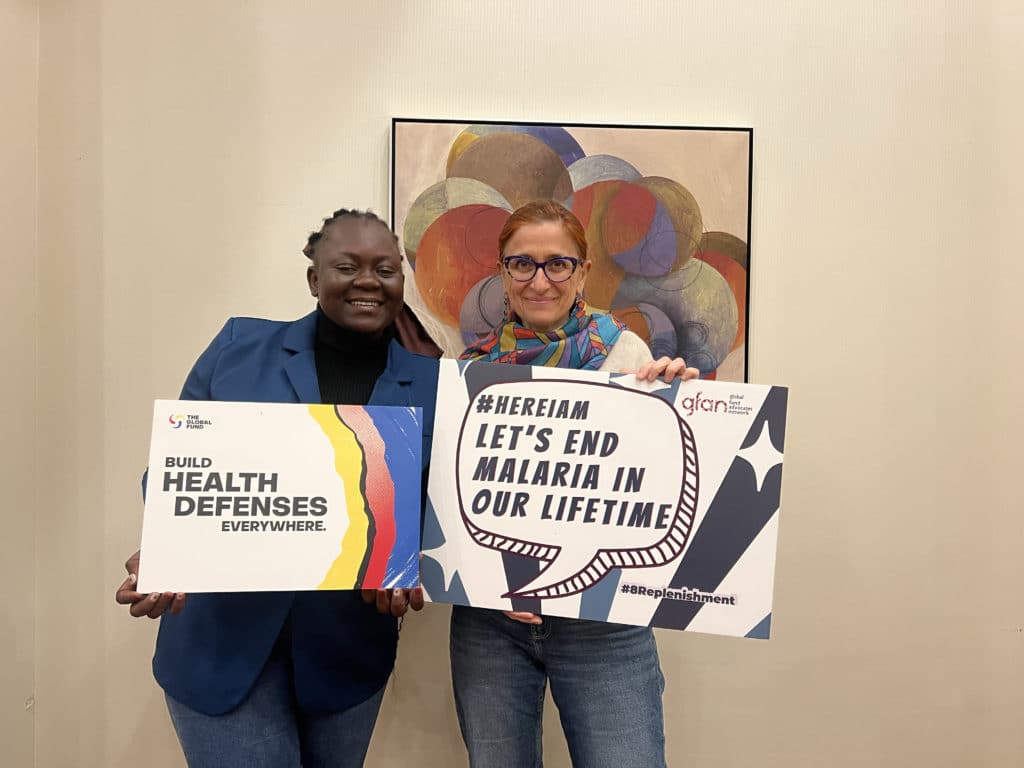
It was in this spirit that I took part in the GFAN (Global Fund Advocates Network) meeting, held in Ottawa from April 7 to 10, 2025. It was a high point for dialogue and mobilization, and as an Essential Voice, I stressed the importance of making the realities of communities heard in international decision-making forums.
"The GFAN 2025 meeting in Ottawa made one thing very clear: we cannot win this battle against malaria, HIV and tuberculosis without the commitment of all stakeholders. From communities to parliamentarians, from young people to political decision-makers, everyone has an essential role to play. The upcoming replenishment will only be successful if it reflects the voices, needs and solutions carried from communities to the highest levels of decision-making, " emphasized GFAN Director Katy Kidd Wright.
Francophone pre-conference to refocus regional priorities
Before the main GFAN meeting, I took part in a Francophone pre-conference. It was an excellent opportunity for sharing, mobilizing and coordinating players from French-speaking countries involved in the fight against disease. We discussed ways of amplifying the voice of French speakers within GFAN, who are often under-represented in global advocacy strategies.
A major point of attention was the need to adapt advocacy approaches to Francophone contexts, taking into account cultural realities, language barriers, but also the specific priorities of the countries concerned. On this occasion, I stressed how essential it was to integrate cross-cutting issues such as women's empowerment, sexual and reproductive health, and the fight against gender-based violence (GBV) into responses to malaria. These dimensions are inseparable from overall health, particularly in contexts where women and girls face multiple vulnerabilities.
Communities at the heart of the response
A central message of this GFAN meeting was the need to make the voices of communities heard. After all, they are the ones who know the realities of the disease, who suffer its consequences, but also who come up with concrete solutions. The Essential Voices, in particular, were highlighted as the driving force behind the co-construction of effective strategies. Women and young people play a central role in this response. They are the ones who take care of families, carry out prevention initiatives, and can be the driving force behind local innovations. It is therefore imperative that they are actively included in international decision-making processes, particularly in the governance of the Global Fund.
" If we really want to defeat malaria, we need to rethink the way we finance the response. Traditional mechanisms are no longer sufficient. The Voix EssentiELLEs initiative is a concrete illustration of this: it not only builds the capacities of women and young people at grassroots level, but also empowers them to propose and implement solutions adapted to their own contexts. This model demonstrates that community-centered, gender-sensitive and trust-based financing is not only possible, but above all effective. It 's time for these approaches to be systematically integrated into international health governance, notably through the Global Fund, " said Maelle Ba, Communications and External Relations Advisor at Speak Up Africa and co-chair of the RBM Partnership to End Malaria's Advocacy, Communications and Resource Mobilization Partners Group.
Major challenges: frozen funding and multiple crises
One of the major obstacles raised during the meeting was the freeze on US funding for global health. The United States, a long-standing player and the Global Fund's main donor, has suspended part of its support. This situation directly jeopardizes the progress made in the fight against malaria, but also against HIV/AIDS and tuberculosis. This funding freeze comes against a backdrop of simultaneous humanitarian and health crises: COVID-19, Mpox, geopolitical conflicts, population displacements, and the growing effects of climate change. Together, these factors are weakening healthcare systems and making the need for greater international support all the more urgent.
" We are facing a convergence of crises - health, humanitarian, climatic and geopolitical - which are putting unprecedented pressure on healthcare systems, particularly in the most vulnerable countries. In this complex context, the risks of regression are real. Without a renewed collective commitment and resources commensurate with needs, hard-won advances in the fight against HIV, tuberculosis and malaria could quickly be wiped out. It is imperative that we reinforce our joint efforts, promote more sustainable and inclusive financing approaches, and support community players who are on the front line. More than ever, international solidarity is not an option, but a vital necessity to preserve the progress made and build resilient health systems, " said Françoise Vanni, Director of External Relations and Communications at the Global Fund.
Prioritizing the fight against malaria at national level
African countries, which continue to bear the heaviest burden of malaria, must now reassert their leadership in the fight against this disease. At a time when international funding is dwindling, it is essential to reinvest more endogenous resources and make the fight against malaria a national priority. This implies a strong political commitment, increased funding from national budgets, and a sustainable strengthening of health systems.
The theme of World Malaria Day 2025, "Reinvesting, reimagining and rekindling our common efforts to end malaria", reminds us of the urgent need for collective and renewed mobilization. This means not only rethinking current strategies, but also rekindling the ambition to eradicate this disease with more resilient approaches, adapted to local realities. In this context, initiatives such as Voix Essentielles or catalytic funds can provide support, but they cannot replace a real willingness on the part of the most affected countries to commit themselves, by investing domestic resources and taking strong decisions. The Global Fund's 8ᵉ replenishment, scheduled for the end of the year, will be an important moment, not to perpetuate a dependence on external aid, but to encourage a renewed and balanced commitment between technical partners and endemic countries.
Multilateralism as a lever for concrete solutions
I also took part in a panel on multilateralism, where we discussed how international cooperation can accelerate the fight against malaria. Multilateralism enables governments, international organizations, civil society and the private sector to act together, in a coordinated way, to meet public health challenges, but this model, as it stands today, is beginning to run out of steam. The panelists put forward some concrete avenues: creating more flexible financing mechanisms, strengthening community care networks, and stepping up awareness-raising efforts in high-risk areas. But above all, it was stressed that decisions must be made with communities, not for them.
Strengthening Francophone voices and participation in governance forums
In this spirit, Voix Essentielles actively participates in GFAN's Francophone calls, which have become a strategic space for updating, exchanging and coordinating global health advocacy. These calls are essential to ensure that the realities of French-speaking countries are taken into account at all levels. Upcoming priorities also include the 53ᵉ Global Fund Board meeting, a key moment to ensure that the delegations representing us effectively defend our voices, needs and priorities. It is essential that decisions taken at this level reflect the realities of communities, and not just political or institutional considerations.
Together for a malaria-free future
The fight against malaria cannot be won without collective commitment, stronger support for communities, and renewed political will. Women, young people and local communities must be recognized as players in their own right, not merely as beneficiaries. To succeed, we need sustainable funding, ambitious international cooperation and equitable representation of community voices in all decision-making bodies. On this World Malaria Day, let us remember that the end of malaria is possible if we place people, social justice and equity at the heart of our actions.